What is an XML roof report?
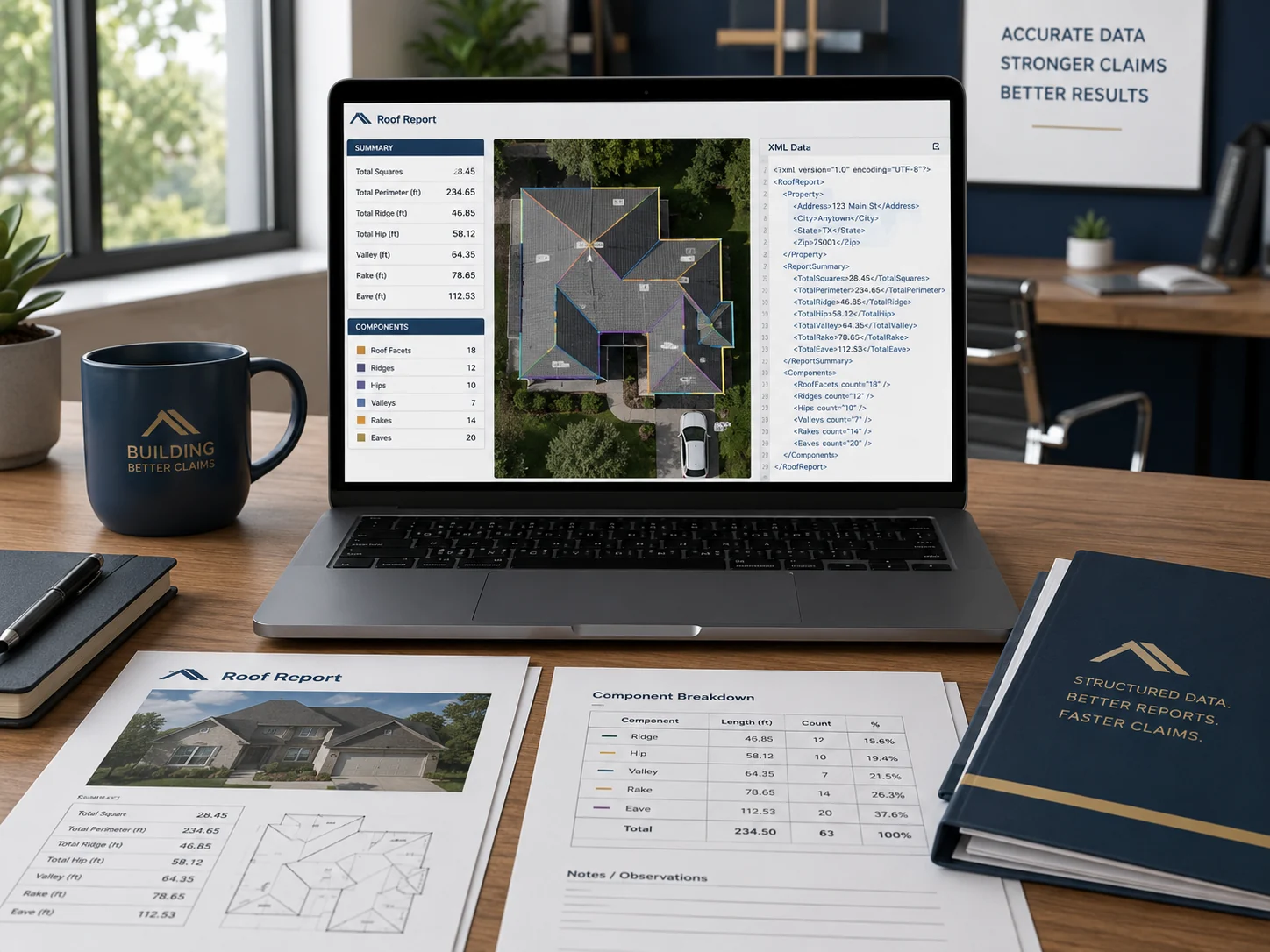
An XML roof report is a structured roof measurement deliverable designed for workflows that use XML-compatible formats, particularly Symbility and AppliCad-style estimating environments. Like ESX, it is not just about the file type. It is about receiving measurement information in a form that is easier to organize, review and use in production.
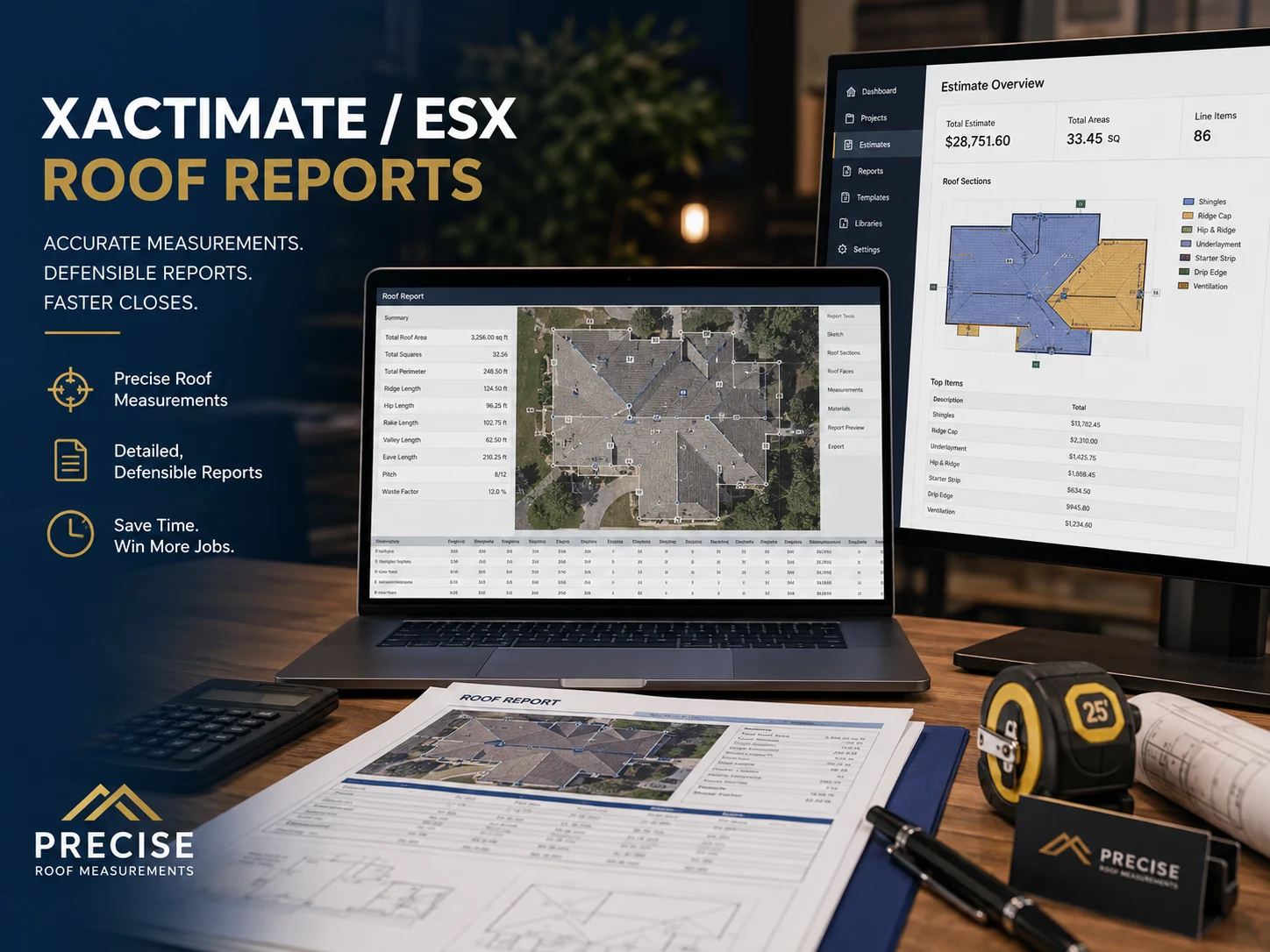
In real-world estimating operations, XML works best when it comes with a visual companion report. The XML supports workflow compatibility, while the PDF supports understanding. Together, they help estimators, adjusters and managers see the same roof more clearly and move the file forward with less back-and-forth.
Who uses XML, Symbility and AppliCad roof reports?
Contractors, restoration firms, insurance-related teams and public adjusters may all rely on XML reports when their workflow is built around Symbility, AppliCad or similar reporting needs. The goal is to avoid re-measuring every property internally and to reduce the time required to prepare an estimate from scratch.
Structured XML support is particularly useful for businesses that handle multiple files per week and want documentation that stays consistent from project to project. Consistency makes review easier and helps teams maintain operational quality as they grow.
Why structured XML reports matter
The more measurement data has to be interpreted manually, the slower the workflow becomes. Structured XML reporting reduces that interpretation burden. Estimators receive information in a cleaner framework, which helps them move more quickly from intake to estimate preparation.
Structured files also improve collaboration. A manager can review the summary, an estimator can build the scope, and another team member can check the report without every person needing to decode raw notes differently. That level of clarity becomes more valuable as team size or order volume increases.
What should be included in a strong XML report?
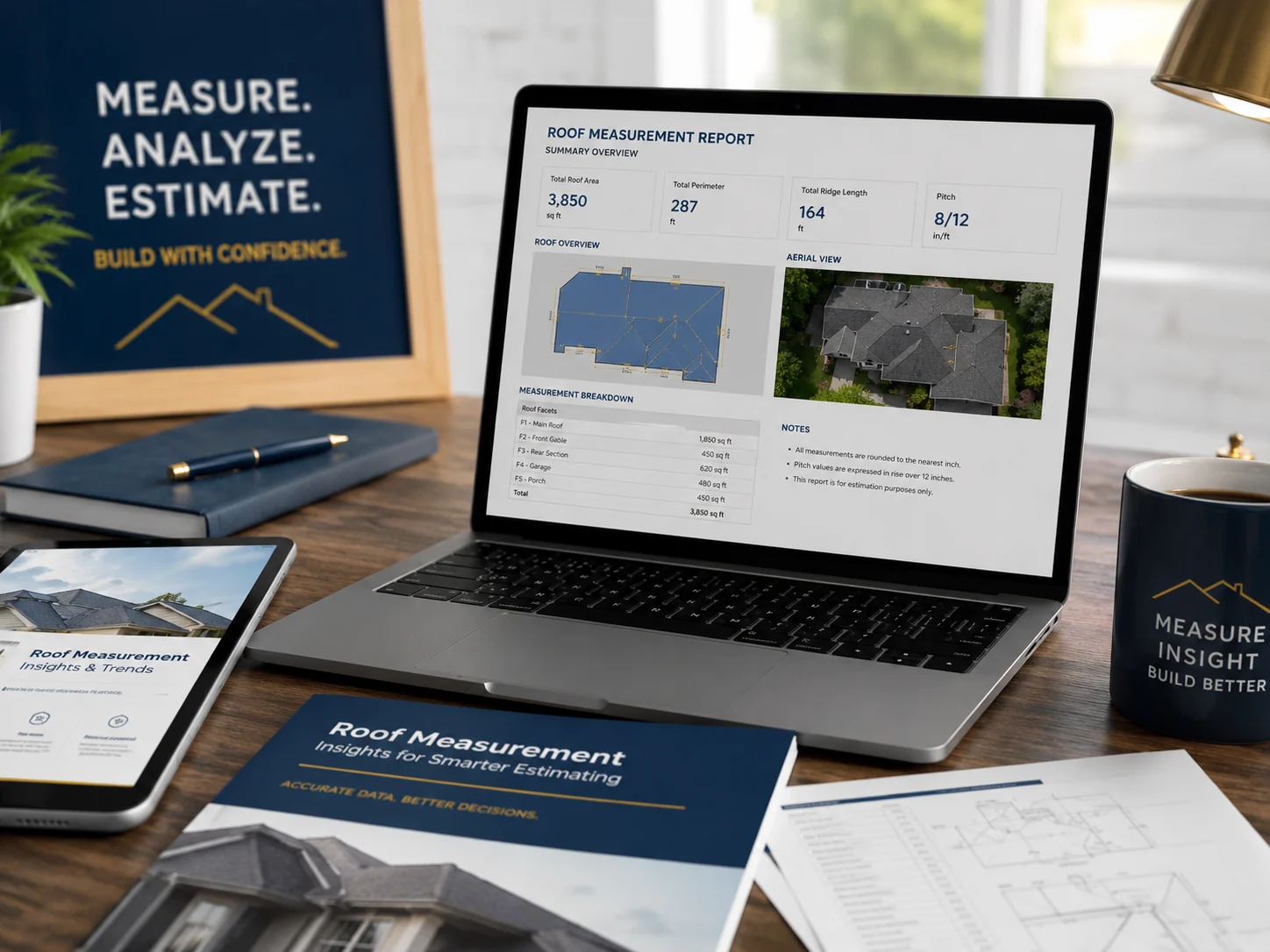
A professional XML roof report should include accurate roof geometry, clean area calculations, line measurements, pitch information and a polished PDF summary. The PDF should show a roof sketch, measurement breakdowns and enough clarity that someone reviewing the file can understand the roof without guessing.
Aerial images, measurement tables and component summaries can improve usability further. The better the organization, the faster your team can review the report and begin estimating.
How XML reports improve workflow speed
Internal teams often become overloaded not because they lack technical ability, but because too much time is spent on repetitive setup work. XML reports help remove some of that repetition. Instead of reformatting measurement notes internally, the team receives information that is already prepared in a structured manner.
That speed advantage is especially important during heavy workloads or after storm events. When more files are coming in, businesses need repeatable systems rather than improvised ones. Structured XML reporting helps create exactly that.
Using XML reports across mixed estimating workflows
Some contractors and restoration companies do not operate inside a single estimating environment. One client may request Symbility-compatible information, another may work primarily from a PDF, and an internal estimator may use a different process. Structured XML reporting gives the measurement side a consistent foundation even when the downstream workflow changes.
That flexibility is useful for outsourced estimating firms and public adjusters that work with several contractor or carrier requirements. A standardized roof report reduces the need to reinterpret the property every time the file changes hands.
The PDF companion remains important in these mixed workflows because it gives every participant a visual reference regardless of which estimating platform they use.
What to verify before using an XML roof report in an estimate
Review the property address, included structures, roof areas and pitch values before importing or using the measurements. On complex roofs, compare the sketch with aerial imagery and inspection photos so additions, detached garages and secondary roof sections are represented correctly.
Estimators should also verify that the linear measurements are reasonable for the roof shape. Ridge, hip, valley, rake and eave totals should make sense when compared with the visible geometry. If something appears unusual, resolving it before pricing is faster than correcting the estimate later.
A simple internal review checklist makes XML reporting more dependable and helps every estimator on the team use the files the same way.
Final thoughts
XML roof reports are valuable because they create compatibility, clarity and operational consistency. For teams that use Symbility or AppliCad workflows, a strong XML deliverable helps reduce friction and accelerate the estimating process.
For teams that use Symbility, AppliCad or mixed estimating workflows, the strongest process is one in which the XML data and the visual PDF tell the same clear story about the roof.
How XML reporting improves handoffs between estimators, adjusters and restoration teams
Roof measurement work often moves between several people before a project is complete. One person may order the report, another prepares the estimate and a third reviews the file for supplements or carrier response. XML reporting helps these handoffs because the underlying measurement data is organized rather than being passed around as informal notes.
The PDF companion is especially useful during these transitions. A new estimator can open the report and immediately understand the roof layout, pitch and major dimensions before working with the XML data. That can save time when projects are reassigned or when an outside estimating partner joins the workflow.
For restoration companies that handle both roofing and broader property claims, consistent report presentation also helps management compare jobs more easily. Standardized measurement packages make it simpler to spot unusual roof sizes, mixed pitches or complex geometry before the estimate reaches final review.
Common questions
Here are a few practical questions that often come up when contractors, adjusters and restoration teams evaluate this topic.
Why include a PDF if the XML file is the main deliverable?
Because the PDF makes it easier to review roof layout, areas and measurements at a glance.
Is XML support useful only for insurance workflows?
No. It also helps contractors and restoration teams that need structured, repeatable roof data.
Can XML reports help a growing team scale?
Yes. Standardized reports make handoffs, review and training much easier.
Need help with XML / Symbility Reports?
If your team wants reliable measurement support with fast turnaround and clear report presentation, TrueTrace Measurements can help you move from intake to estimating faster.
Explore the Service