Why the contents of a roof report matter
Many companies say they provide roof measurement reports, but the quality and usefulness of those reports can vary a lot. A true professional report should do more than show a roof outline. It should give contractors, adjusters and estimators the exact information they need to move confidently into estimating and documentation.
That is why understanding report contents matters. When buyers know what should be included, they can compare providers more effectively and avoid paying for a report that looks technical but lacks practical value.
The core elements every strong roof report should include
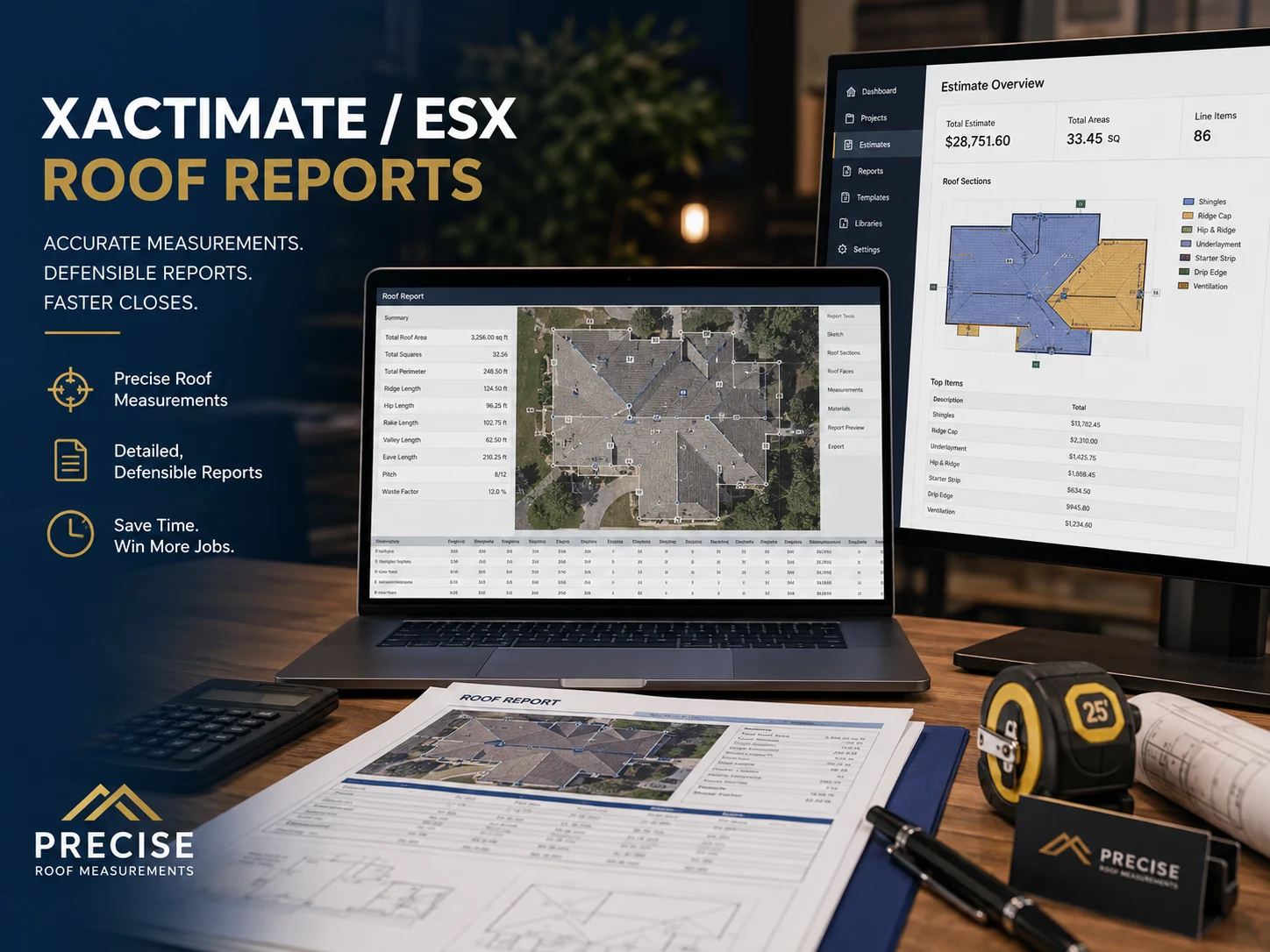
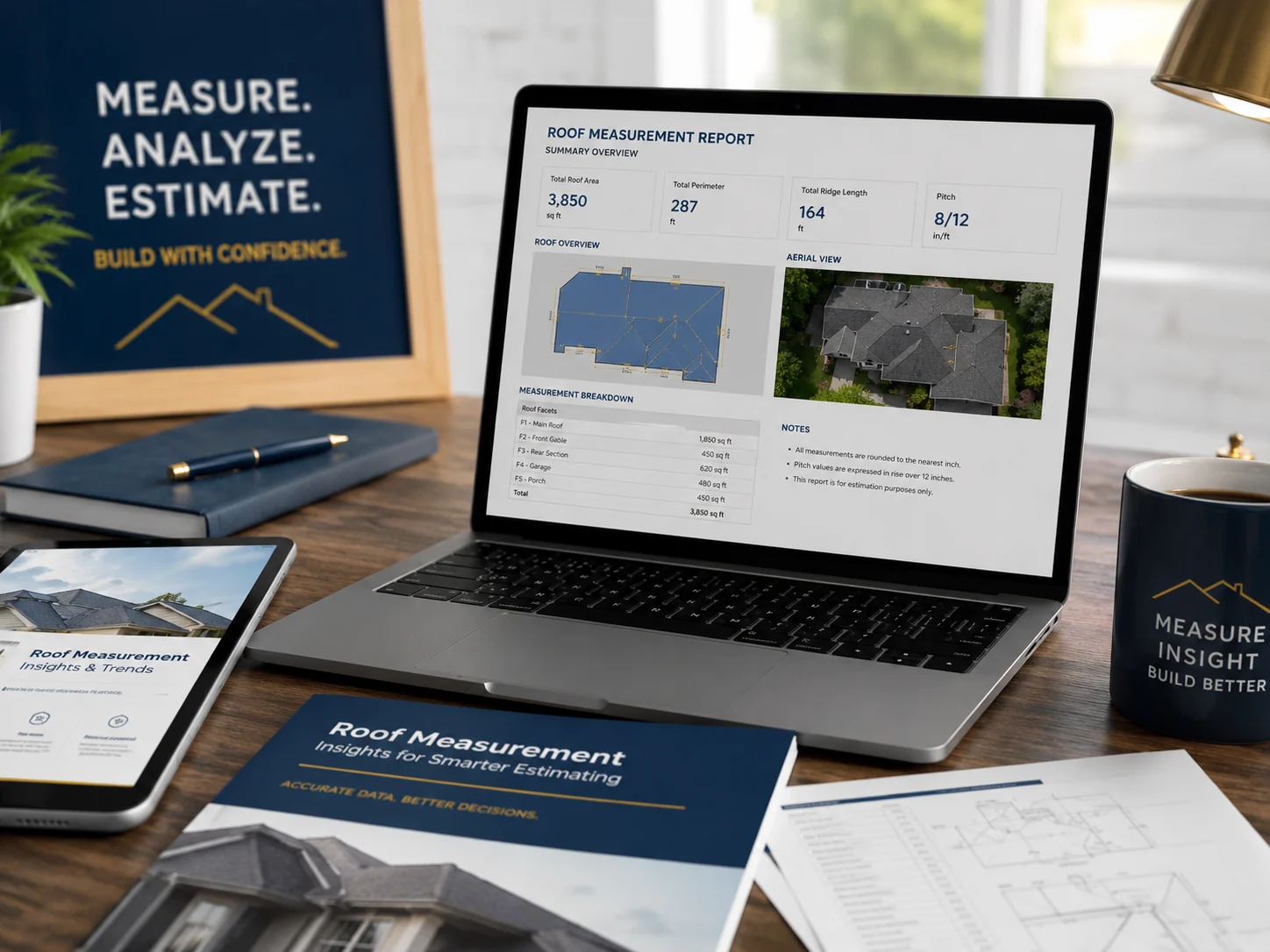
At a minimum, a professional roof measurement report should show a clear roof sketch, total roof area, roof-face breakdowns, pitch values and the major linear measurements such as ridge, hip, valley, rake and eave. These are the details estimators use regularly.
The report should also make the structure of the roof easy to understand. That means organized sections, readable labels and a visual flow that lets the reviewer move quickly from overview to detailed breakdowns.
Why aerial imagery and visual support improve usability
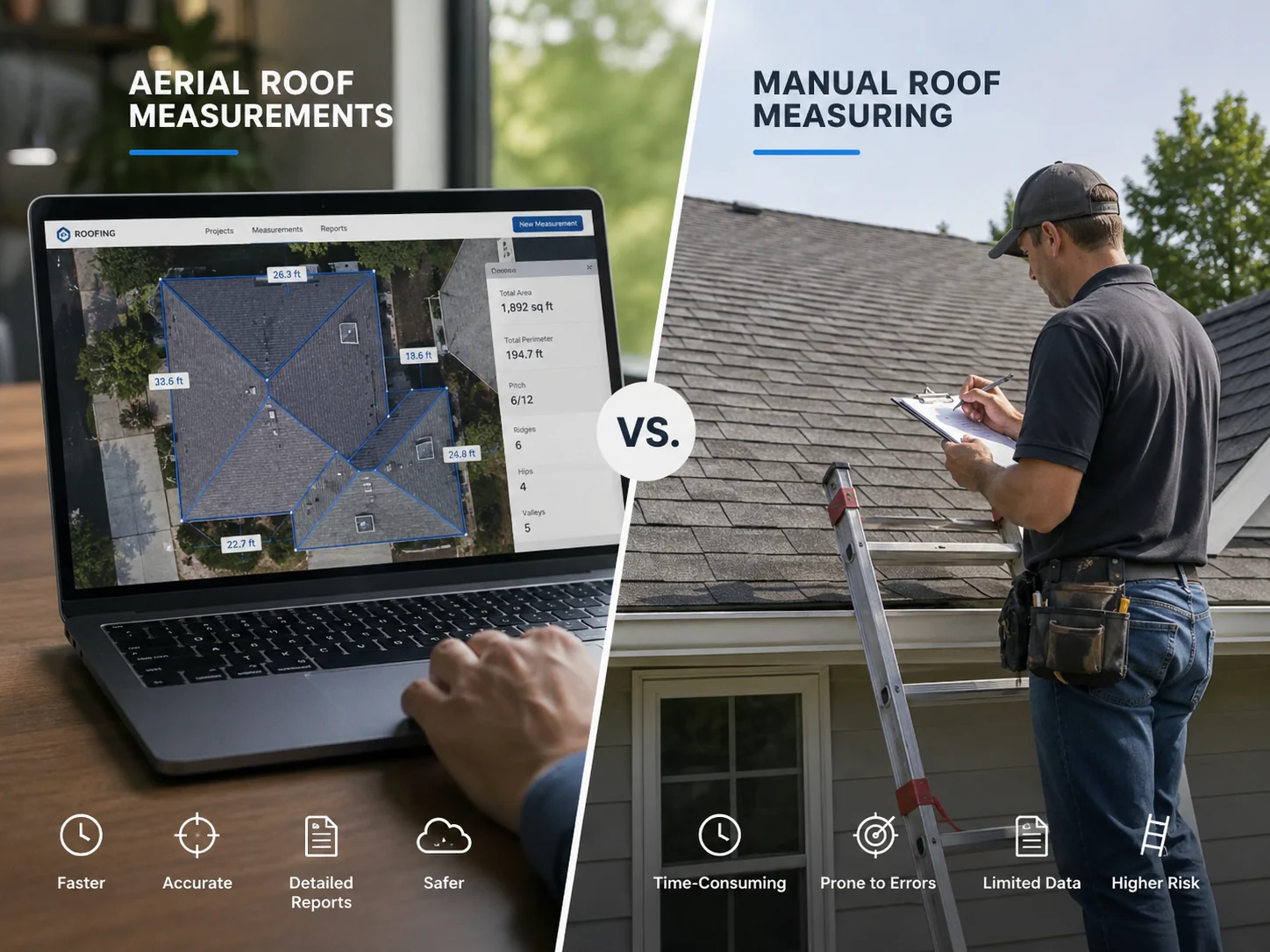
Aerial views help users interpret the roof more confidently. Instead of relying only on numbers, the reviewer can connect those numbers to an image of the property and a visual sketch of the roof layout.
This is especially important when more than one team member works on the same file. Good visuals reduce miscommunication and make it easier for estimators, coordinators and project managers to discuss the roof using the same frame of reference.
Why summary tables and breakdowns matter
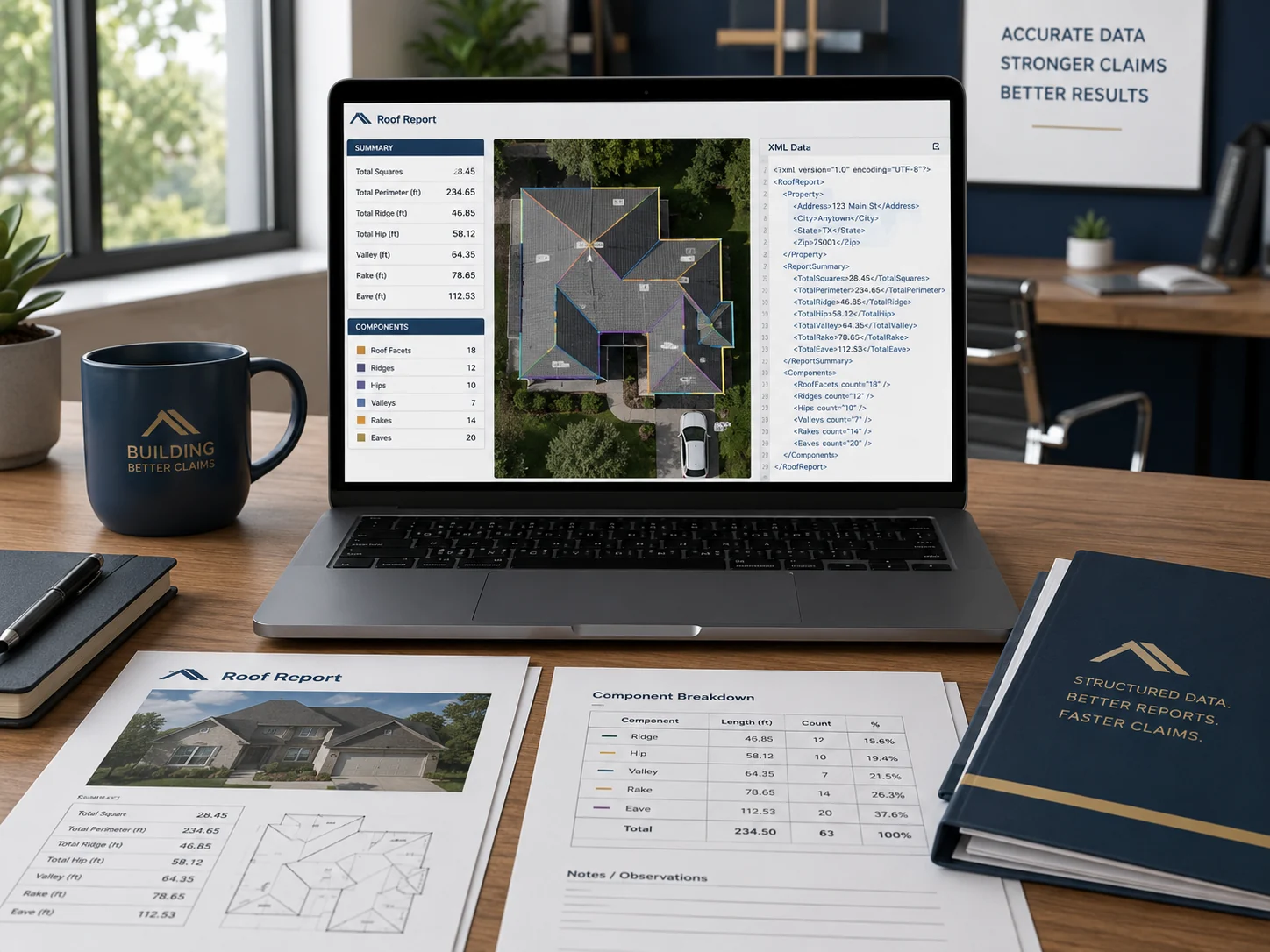
One of the biggest differences between an average report and a strong report is how clearly the information is organized. Tables that summarize facets, lengths, areas and pitches make the report easier to review and easier to use inside the estimate workflow.
Clear breakdowns also help later in the process. If the estimator revisits the job, or if another team member has to review the file, well-structured tables save time because the information is easier to retrieve.
How contractors and adjusters actually use these reports
Roof measurement reports are used for much more than simple quoting. Contractors use them to prepare estimates faster, adjusters use them to organize claim files and restoration companies use them to reduce workflow bottlenecks. The better the report, the easier it is to adapt it to these different needs.
That is why readability and consistency matter. A report should be useful on day one, but it should also remain useful later when someone needs to revisit the project or verify scope decisions.
How estimators should verify a roof report before pricing
Before using any measurement report to finalize an estimate, the estimator should confirm that the property and structures are correct, review the roof sketch against the aerial image and check whether the pitch values make sense for the visible roof sections.
The estimator should also scan the linear-measurement summary for unusual values. A very short valley, an unexpectedly long eave or a roof area that looks inconsistent with the property can be a sign that the file deserves a closer review before material quantities are calculated.
This short validation step keeps the report useful as a quality-control tool. The goal is not to re-measure the entire roof; it is to confirm that the organized data matches the job the estimator is about to price.
What a report should show on complex roofs
Complex roofs need more than a single total-area number. Dormers, intersecting gables, porch roofs, attached garages and different pitch sections should be represented clearly so the estimator can see how the roof is assembled.
Facet-level information is useful because it separates the structure into understandable pieces. If a later supplement or production question involves one section of the roof, the team can return to that part of the report instead of reinterpreting the entire property.
The clearer the geometry is presented, the easier it becomes to identify unusual conditions that may require field confirmation.
For contractors handling reroofs or insurance restoration, the report should also be compared with current inspection photos whenever the property has visible additions, damaged sections or unusual transitions. A measurement report describes geometry; field photos confirm present conditions. Using both together gives the estimator a stronger basis for scope and material decisions.
Final thoughts
A professional roof measurement report should deliver clarity, structure and usable data. It should help the client understand the roof quickly and start estimating with confidence.
For contractors and adjusters, the best report is one that reduces questions later. Clear measurements, readable tables and well-organized roof geometry make the document useful from the first estimate through supplements and production.
How an estimator should work through a roof measurement report
A practical review usually starts with the aerial image and roof sketch. The estimator confirms the property and makes sure the roof geometry matches the inspection photos. Next comes total area and pitch, followed by the linear measurements that affect accessories and detail work.
After the basic geometry is confirmed, the estimator can review waste-factor options and apply the company’s material assumptions. Complex roofs may justify a different waste percentage than simple gable roofs, and premium shingle patterns may create different cutting requirements. The report provides the measurements; the estimator applies the roofing system knowledge.
Working through the report in the same order on every job creates a repeatable estimating process. It also helps supervisors audit estimates because they can see which measurement source was used and how the estimator moved from roof geometry to final quantities.
Common questions
Here are a few practical questions that often come up when contractors, adjusters and restoration teams evaluate this topic.
Do all roof reports include the same items?
No. Some are basic, while better reports include cleaner breakdowns, pitches, area tables and supporting visuals.
Why are pitch values important?
They help estimators understand the roof more completely and support more accurate estimating.
Should a contractor care about report layout?
Yes. Better layout means faster review and less confusion for your internal team.
Need help with Roof Measurement Reports?
If your team wants reliable measurement support with fast turnaround and clear report presentation, TrueTrace Measurements can help you move from intake to estimating faster.
Explore the Service