Why the accuracy question comes up so often
When contractors first consider aerial roof measurements, the first concern is usually accuracy. That is understandable because the measurement stage influences everything that comes after it. If the roof setup is unclear, the estimate becomes harder to trust.
However, the question is often framed too simply. The real issue is not whether aerial measuring is magically perfect or flawed. The real issue is whether the report is prepared through a disciplined process that makes it dependable for real estimating work.
Why process quality matters most
Aerial measurement quality depends on the imagery, tracing discipline, review standards and report clarity behind it. A carefully hand-traced report can provide excellent practical value, while a sloppy process can create weak results regardless of the method used.
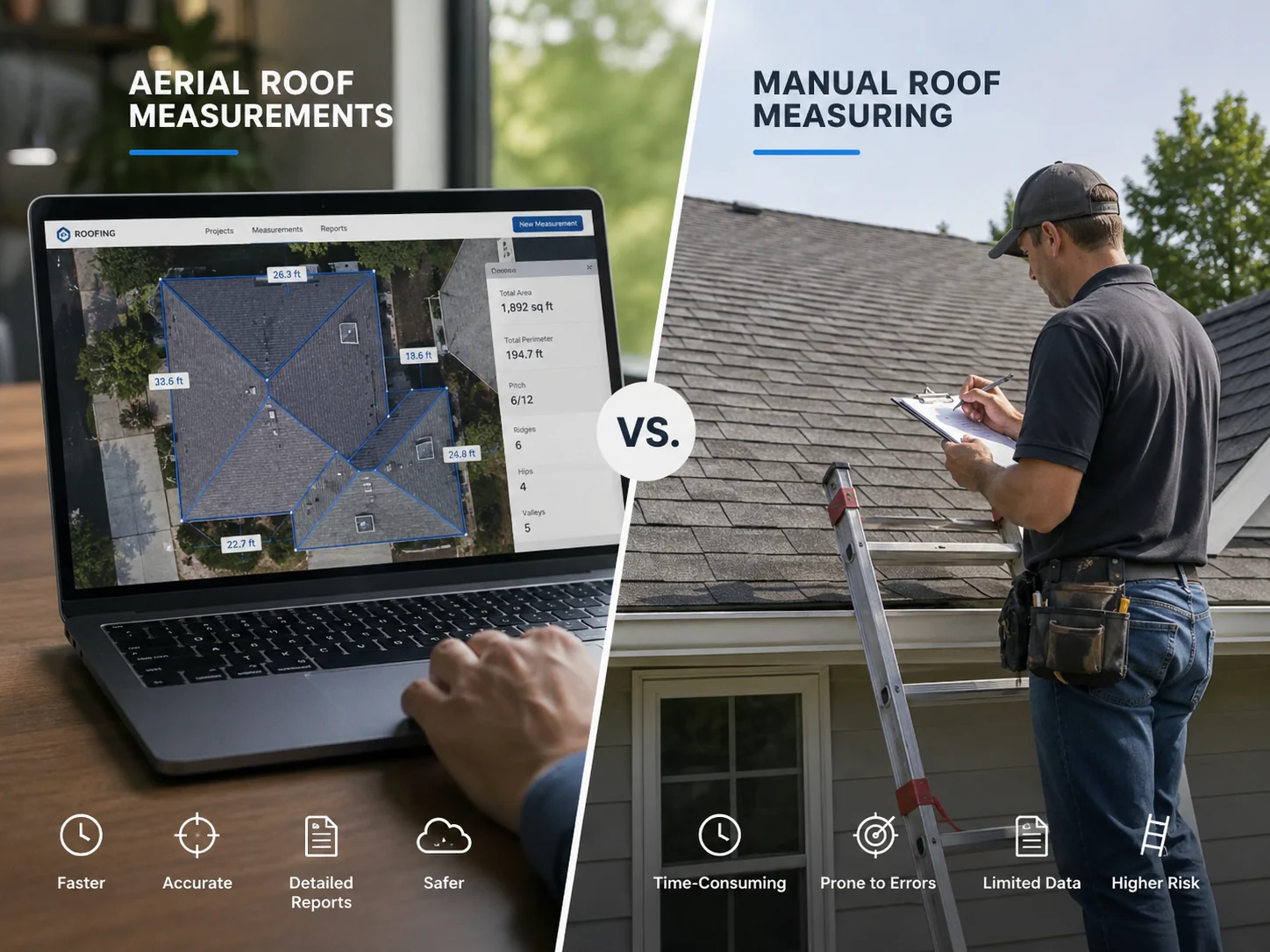
This is also true of manual measuring. Field measuring is not automatically accurate just because a person visited the property. Human error, rushed work and inconsistent methods can affect manual results too.
Understanding practical accuracy
For most contractors, the goal is not abstract perfection. The goal is a report that is accurate enough to support confident estimating and efficient workflow. In that sense, practical accuracy means the report is clear, consistent and reliable within the way the business actually operates.
That is why many companies successfully rely on aerial measurement reports for everyday quoting and claim support. They need speed and consistency, and strong aerial reports provide both.
How to evaluate an aerial report before buying
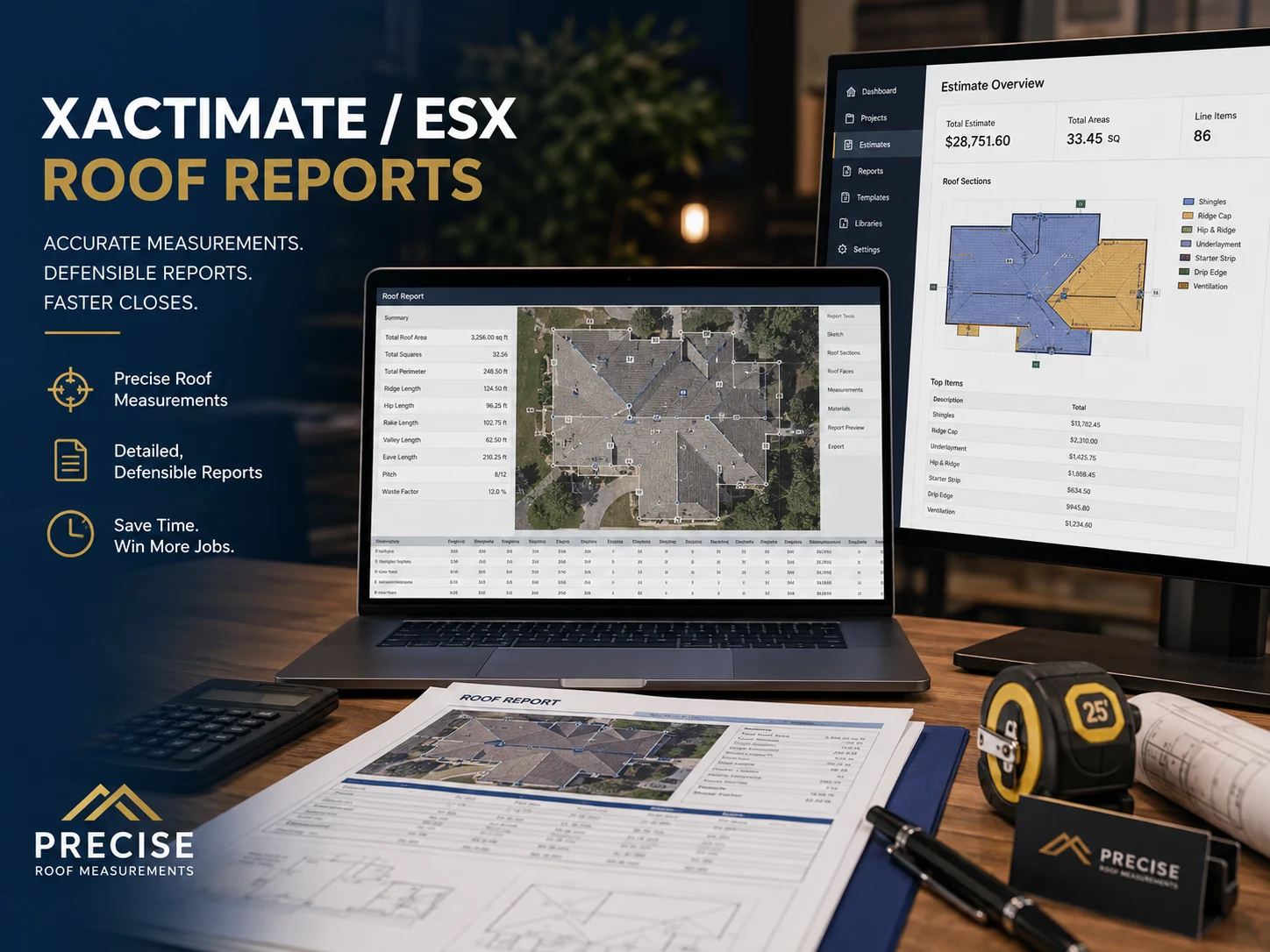
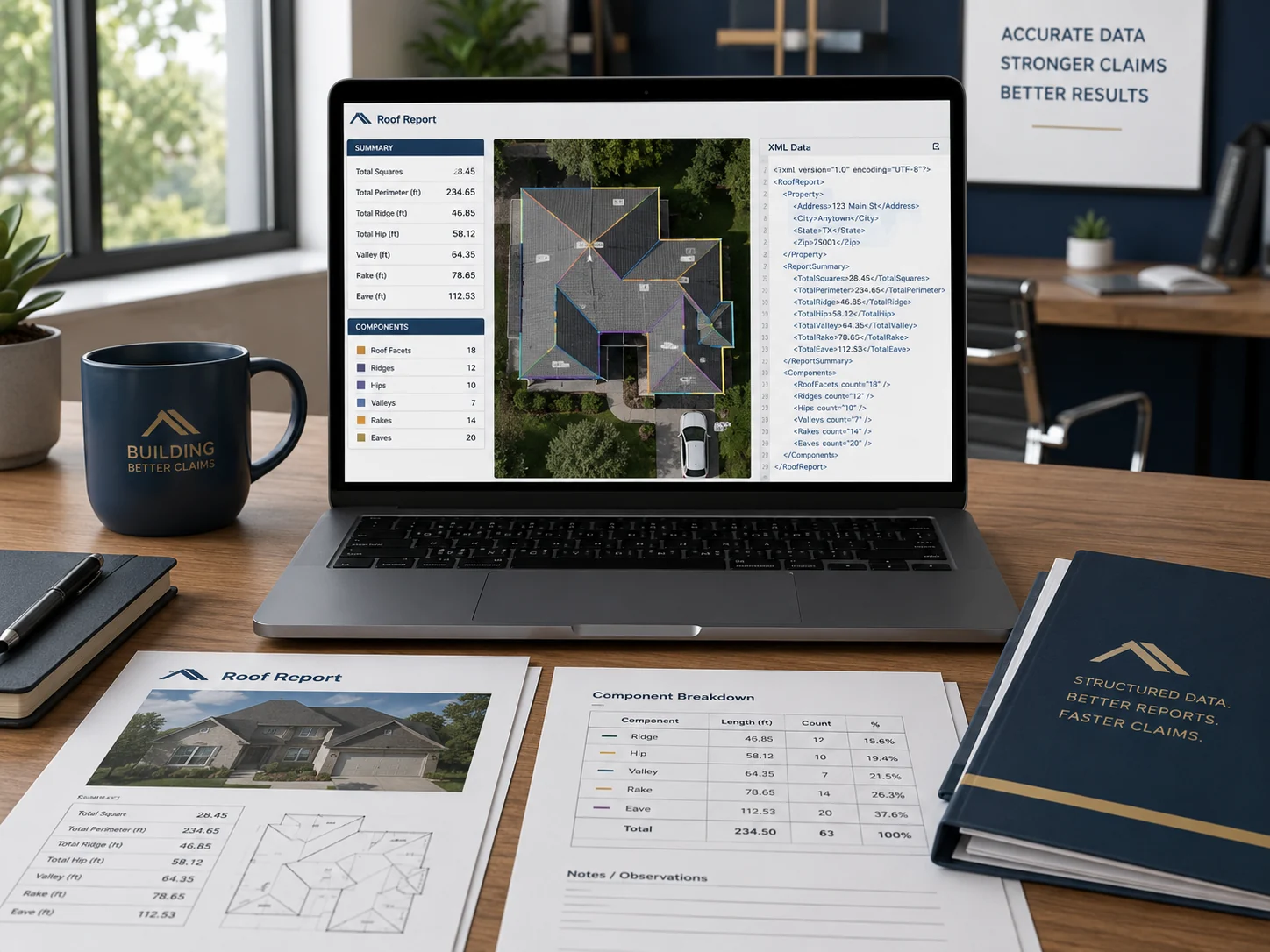
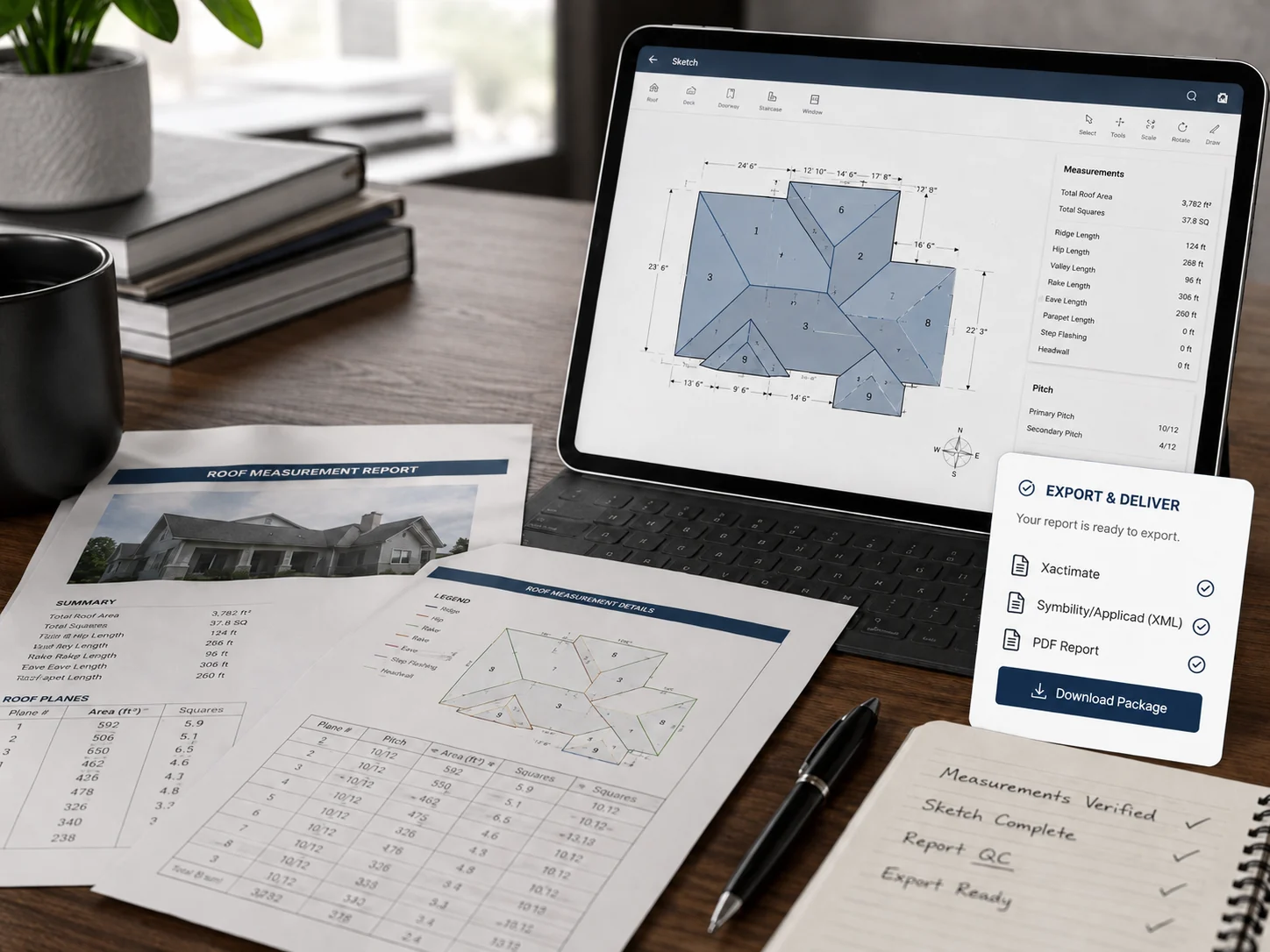
The easiest way to evaluate quality is to review a sample report closely. Look at the roof sketch, summary tables, pitch information and clarity of the overall layout. Ask whether your estimator could understand the roof quickly and work from the document without extra effort.
If the sample feels confusing, the workflow probably will too. A high-quality provider should be able to show a report that feels organized, readable and estimator-friendly.
Why consistency matters as much as raw precision
Consistency is often underrated. Even a technically accurate report loses value if each order is structured differently. Teams work faster when the report format stays familiar and the measurement logic remains consistent across jobs.
That consistency reduces training time, supports internal handoffs and improves operational confidence. For many businesses, that is where a specialist provider delivers the most value.
When field verification should supplement aerial measurements
Aerial measurements are highly useful for routine estimating, but contractors should still recognize the situations where field verification adds value. Recent additions, hidden roof sections, heavy tree coverage, unusual roof transitions or changes that occurred after the available imagery was captured may require a closer look.
The efficient approach is not to re-measure every roof manually. Instead, use the aerial report as the primary geometry reference and verify only the details that cannot be confirmed confidently from imagery and inspection photos.
This hybrid method preserves the speed of aerial measurement while keeping field judgment available for exceptions.
A contractor checklist for validating an aerial roof report
Start by confirming the address and property image. Then check that all intended structures are included and that detached buildings are not accidentally added. Review the roof sketch against inspection photos, paying special attention to dormers, porch roofs and additions.
Next, review pitch assignments and compare major line measurements with the visible roof shape. If the report includes a waste-factor table, choose the value based on roof complexity and material rather than automatically selecting the same percentage for every job.
This quick validation process helps contractors get the speed benefits of aerial measuring while still applying field knowledge where it matters.
Final thoughts
Aerial roof measurement reports can be highly accurate and highly useful when prepared through a disciplined, hand-traced workflow. The right way to judge them is through report quality, consistency and sample clarity, not assumptions alone.
For contractors, the best approach is to treat aerial measurement as a professional estimating input: review it, compare it with field information and verify any section that cannot be confirmed confidently.
How difficult properties should be handled instead of forcing a measurement
Some properties are simply harder to measure from imagery. Dense trees may hide roof edges, dark roofing materials may blend into shadows, and recent construction may not appear in older imagery. Complex commercial properties can also include rooftop equipment, parapets and multiple elevation changes that need extra interpretation.
A professional provider should recognize those conditions and communicate them. In some cases, another image source or oblique view can clarify the geometry. In others, the correct recommendation is to confirm a section in the field rather than presenting an uncertain measurement as final.
This is an important quality-control principle for contractors. The strongest measurement workflow is not the one that claims every property can be solved perfectly from a desktop. It is the one that identifies uncertainty early and uses the most appropriate verification method for the job.
How field photos and aerial measurements should be used together
Aerial measurements and field photos answer different questions. The aerial report explains geometry and dimensions, while field photos document current conditions, visible damage, materials and details that may not be visible from overhead. Contractors get the strongest result when the two sources are reviewed together instead of treating one as a replacement for the other.
During estimate preparation, compare photos of additions, porch roofs, dormers and low-slope sections with the report sketch. If a field photo shows a roof section that is difficult to identify in the aerial image, flag it for closer review before pricing. The same approach works for commercial roofs with parapets or rooftop equipment that can hide edges.
This combined review is fast once it becomes part of the normal workflow, and it reduces the chance that a measurement question reaches production or supplement review later.
Common questions
Here are a few practical questions that often come up when contractors, adjusters and restoration teams evaluate this topic.
Are aerial reports reliable enough to quote jobs?
Yes, when they are prepared carefully and reviewed properly, they are highly useful for quoting and estimate prep.
Is manual measuring always more accurate?
Not automatically. Process quality matters in both methods.
What should I review in a sample report?
Look for clear sketches, readable tables and logical measurement organization.
Need help with Aerial Roof Measurements?
If your team wants reliable measurement support with fast turnaround and clear report presentation, TrueTrace Measurements can help you move from intake to estimating faster.
Explore the Service