Why claim workflows slow down
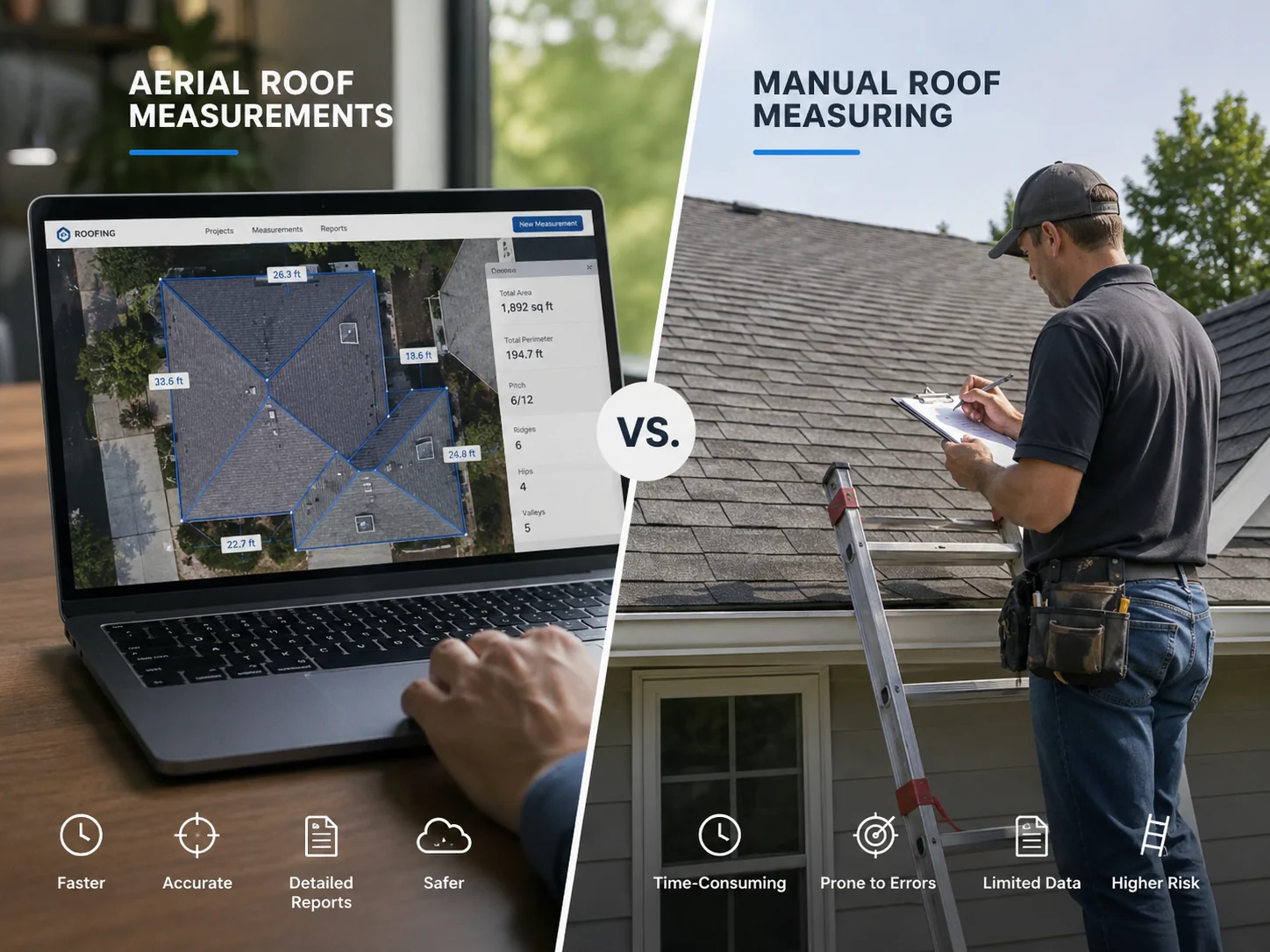
In many roofing and restoration businesses, the file does not slow down because the team lacks knowledge. It slows down because too much time is lost in repeated setup work. Roof geometry has to be reviewed, notes have to be organized and measurements have to be turned into something the estimator can actually use.
That is one reason roof measurement reports matter so much in claims-related work. They help convert raw roof information into a usable format early, which makes the rest of the estimating workflow smoother.
How measurement reports save time
The time savings come from structure. When the roof sketch, measurements and summary tables are already prepared, the estimator spends less time setting up the job and more time building the estimate. During periods of high claim volume, this time saving becomes even more valuable.
It also helps reduce waiting between steps. Files are less likely to sit idle because someone still needs to calculate roof areas or recheck the layout.
Why reports help with supplements and revisions
Claim files rarely end with the first estimate. Supplements, revisions and scope reviews are common. A strong roof report makes those follow-up steps easier because the geometry can be reviewed again without recreating the roof from scratch.
That clarity helps teams defend their scope decisions and improves internal confidence when new questions arise later in the claim.
Why this matters when claim volume increases
Storm season puts pressure on almost every roofing and claims-related business. The problem is not just getting more work; it is handling that work without letting files stall. Roof measurement support becomes a leverage point because it helps the team keep moving even when file volume rises.
For many companies, that is the difference between controlled growth and operational chaos. Clear, consistent reports help maintain order during busy periods.
How faster roof data improves claim communication
Faster roof measurements help the estimating team respond sooner to the people waiting on the file. Contractors can prepare scopes more quickly, public adjusters can organize estimate documentation sooner and supplement writers can review roof geometry without waiting for a new measurement cycle.
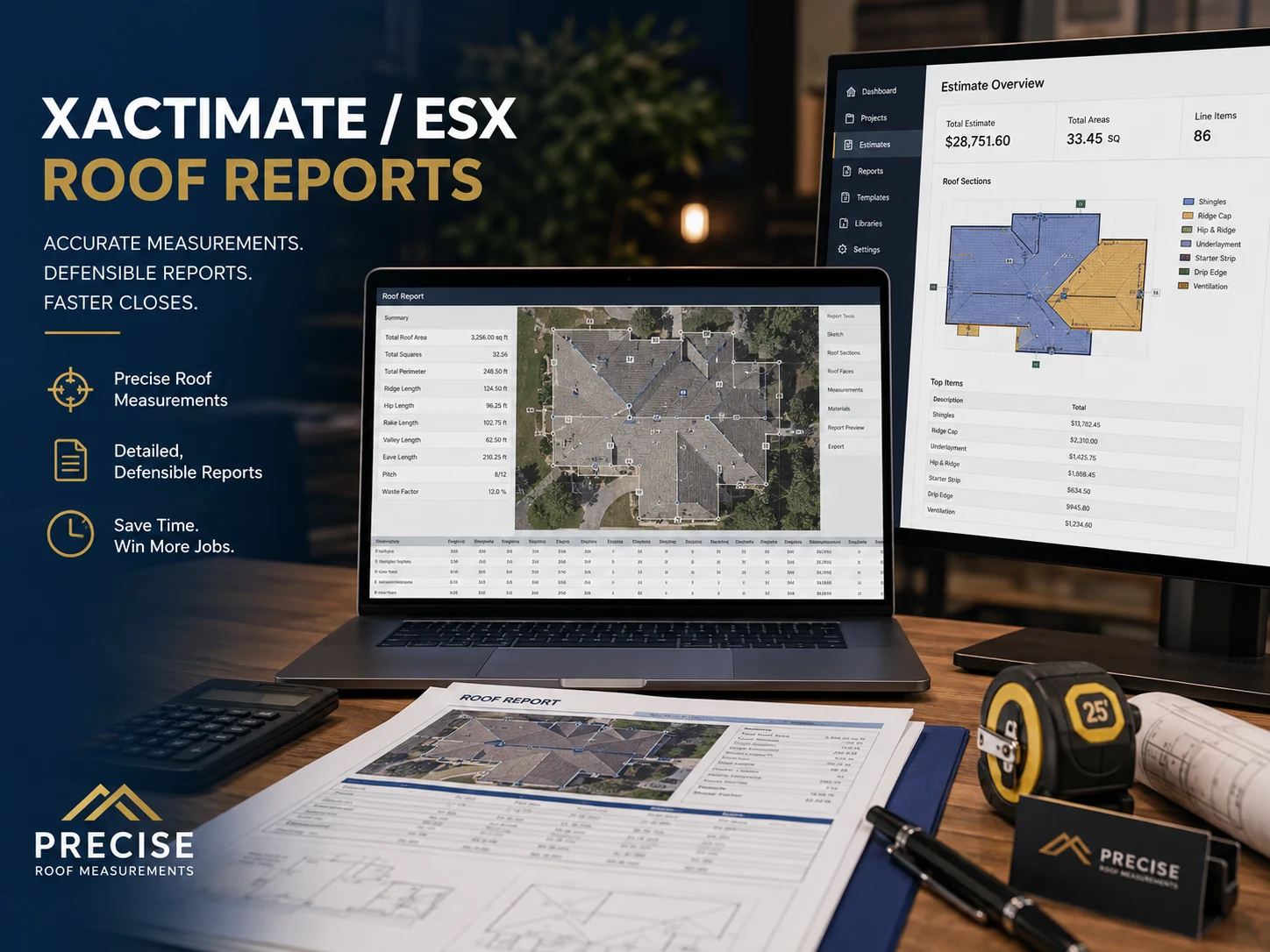
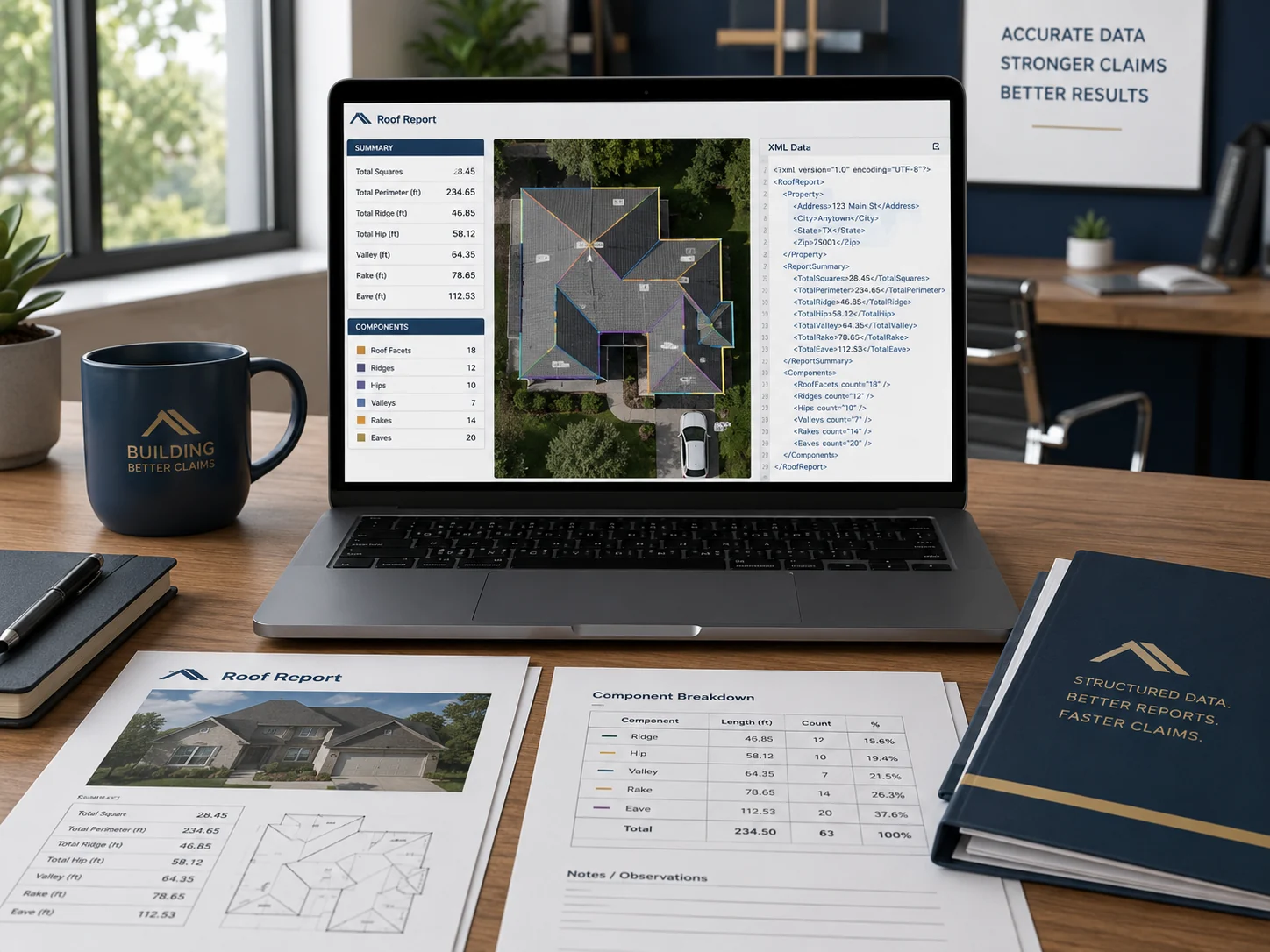
That speed is most useful when it is paired with organized documentation. Keeping the PDF report, ESX or XML file, inspection photos and estimate together gives the team one reference set and reduces time spent searching through email threads or old attachments.
The measurement report does not replace damage documentation or claim judgment. Its role is to make the dimensional side of the file easier to understand so the team can spend more time on scope, pricing and communication.
A practical review process before submitting or supplementing a roof claim
Before the estimate is finalized, compare the roof measurement report with the inspection photos. Confirm that the correct structures are included, pitches are reasonable and any detached buildings are handled according to the claim scope.
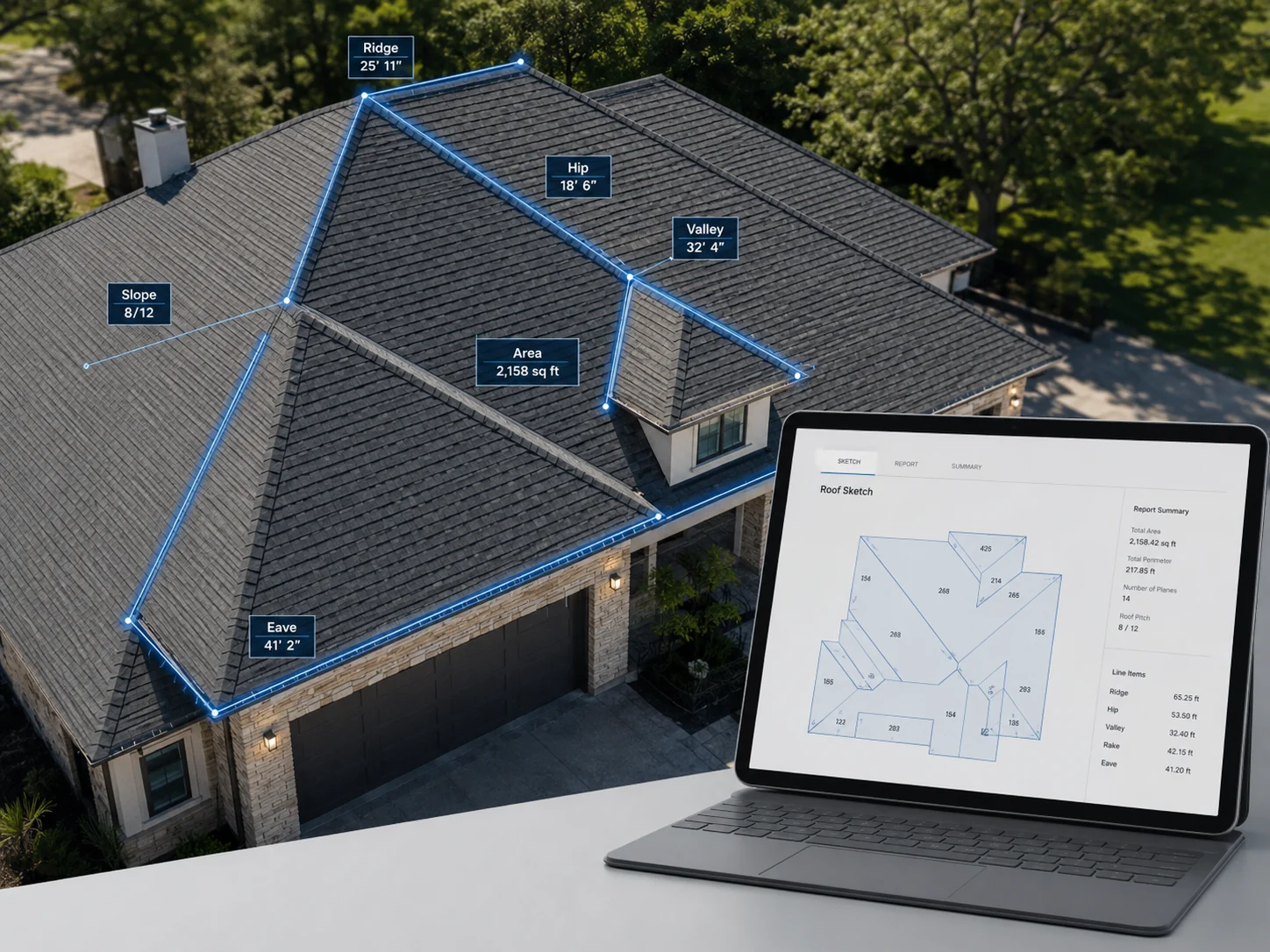
Next, review the estimate against the roof geometry. Items tied to ridge, valley, eave or rake should make sense compared with the report. This is also a good time to confirm that waste assumptions match the roof complexity and material type.
Finally, keep the report with the claim file so the same dimensions are available if the carrier requests clarification or the contractor prepares a supplement later.
Final thoughts
Roof measurement reports help speed up insurance-related workflows because they reduce early-stage friction, improve team alignment and support cleaner estimate preparation. They are not just documents; they are workflow tools.
For claims teams, the value is operational: the same roof geometry can support the first estimate, internal review and later supplements, reducing repeated measurement work each time the file is reopened.
How different members of a claim team use the same roof report
A contractor estimator may use the report to build the initial scope, while a public adjuster may use the same geometry when reviewing the claim from the policyholder side. A supplement writer may later focus on line items tied to roof edges, waste or specific sections. Even though each person has a different role, they benefit from having the same measurement reference.
Project managers and office staff also gain value from the report because they can understand the property without needing to recreate the roof in an estimating platform. That makes internal conversations easier when questions come up about roof size, detached structures or the relationship between different roof sections.
The best practice is to treat the report as part of the claim documentation set. When the report stays with the photos, estimate and supplement history, the file is easier to understand months later and less dependent on the memory of the person who handled the original estimate.
How to organize roof measurement reports inside a claim file
A strong measurement report is easier to use when it is stored consistently. Contractors and public adjusters should keep the PDF, ESX or XML file, inspection photos and estimate in the same project folder with clear file names. That prevents team members from working from an outdated version or searching through email threads for the correct document.
If the file is supplemented, keep the original report rather than replacing it. The measurement geometry usually remains the same even when scope changes, and preserving the original reference makes it easier to understand why the estimate evolved.
For high-volume restoration teams, consistent file organization can save almost as much time as the report itself because every estimator and supplement writer knows where to find the roof data.
Common questions
Here are a few practical questions that often come up when contractors, adjusters and restoration teams evaluate this topic.
How do roof reports help with claims?
They organize the roof data needed for estimating and reduce the time spent recreating measurements manually.
Are these reports useful for supplements too?
Yes. They make it easier to revisit geometry and defend scope decisions later in the file.
Who benefits most from them?
Roofing contractors, public adjusters and restoration teams handling multiple files.
Need help with Roof Measurement Reports?
If your team wants reliable measurement support with fast turnaround and clear report presentation, TrueTrace Measurements can help you move from intake to estimating faster.
Explore the Service